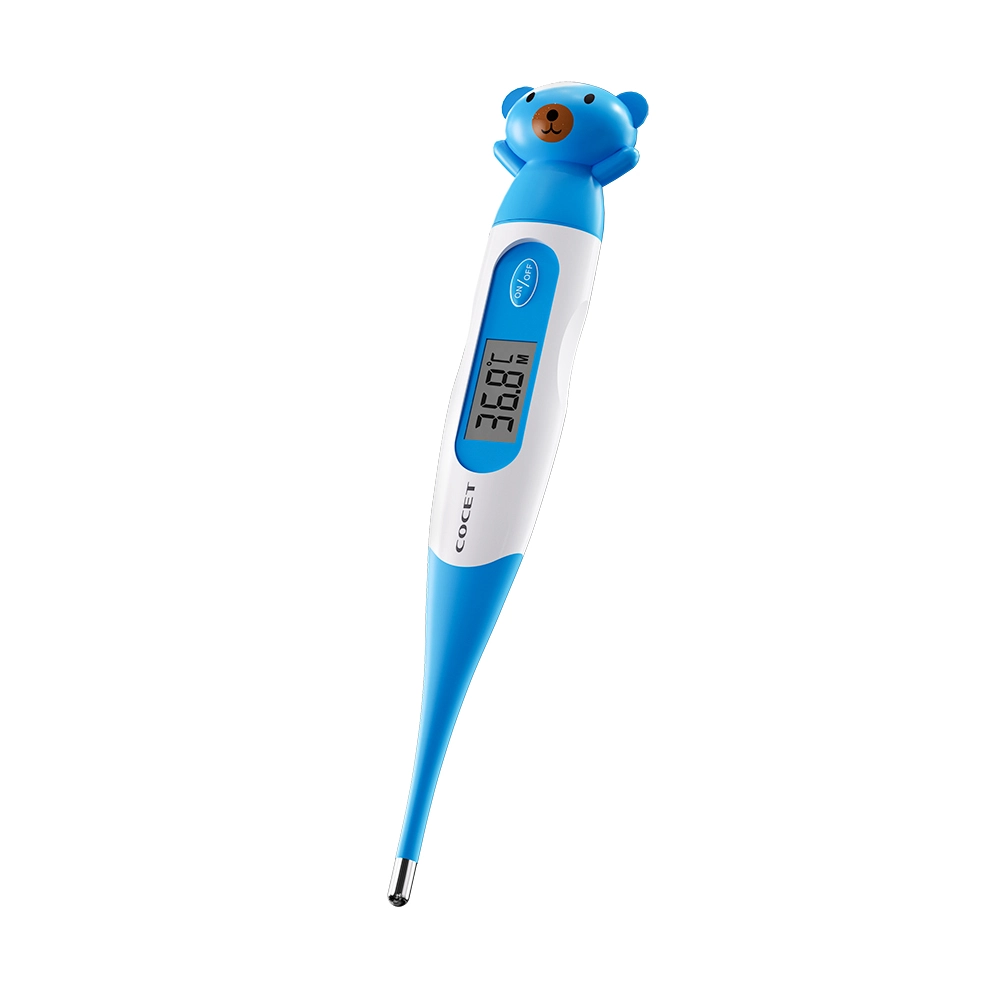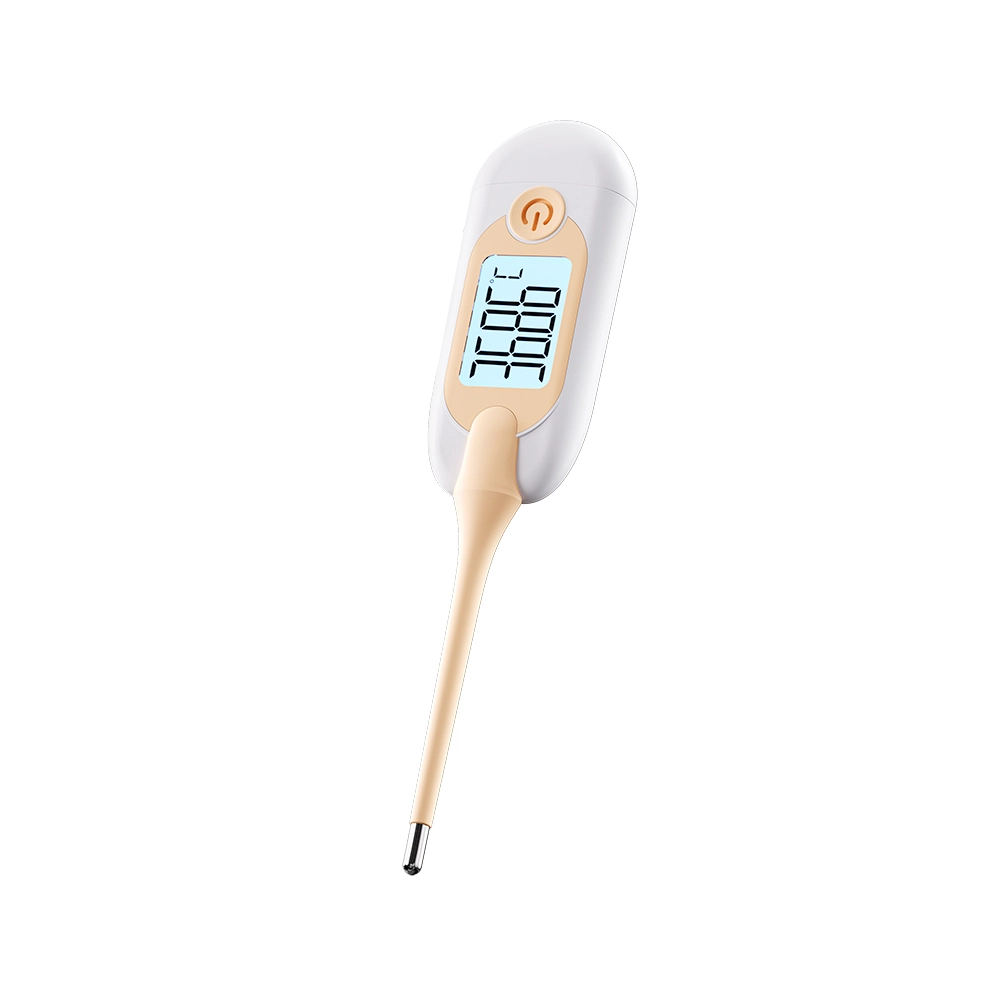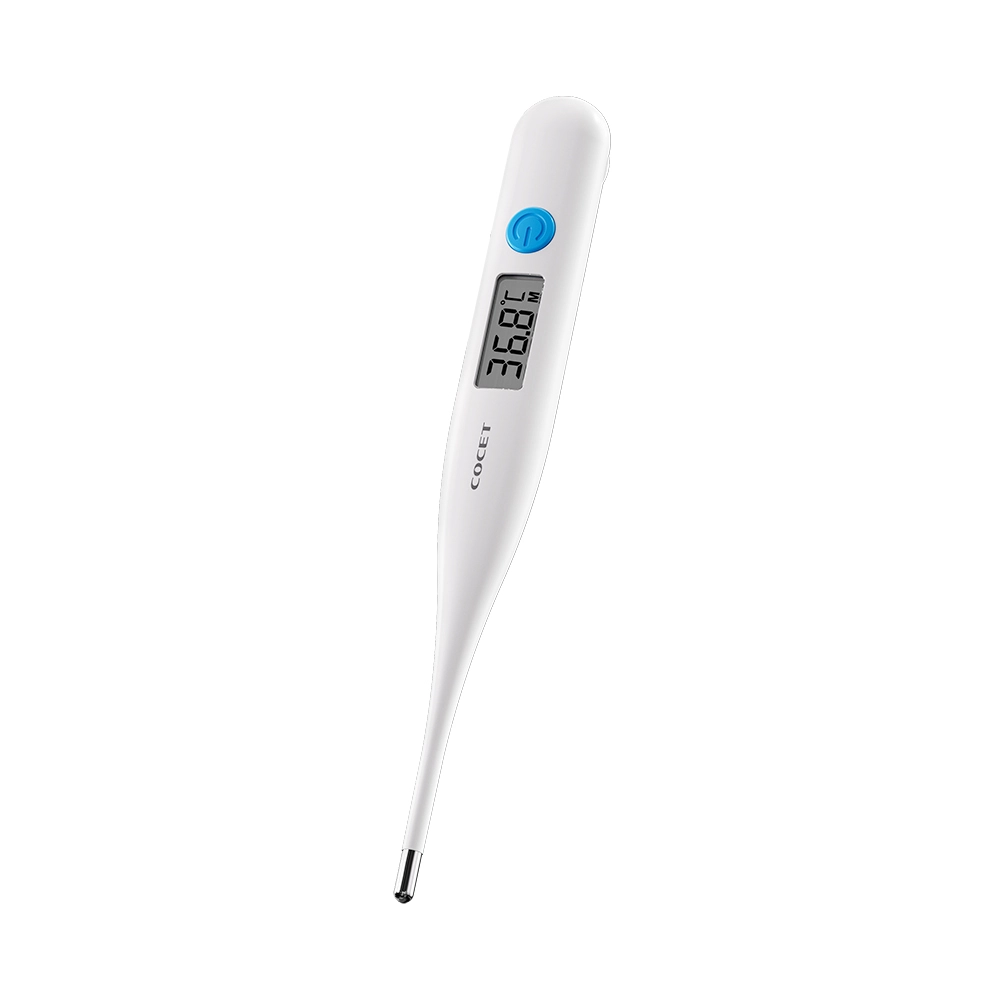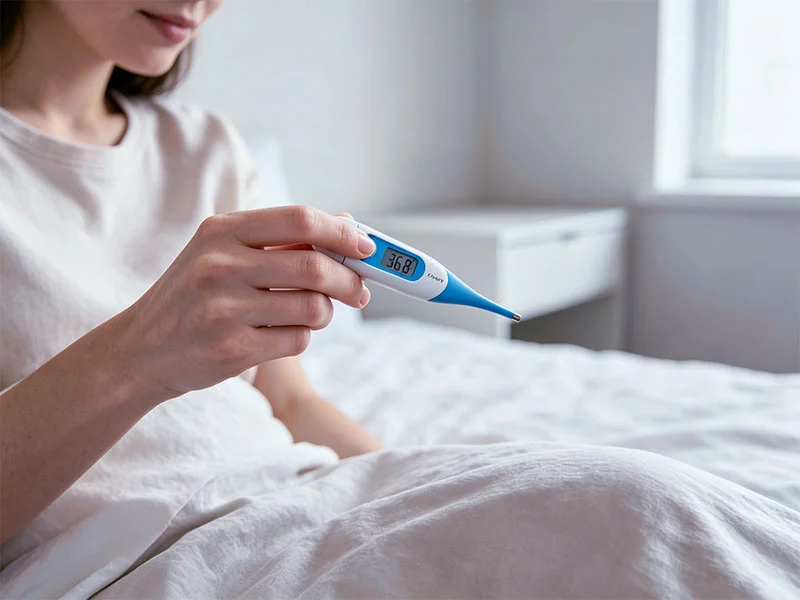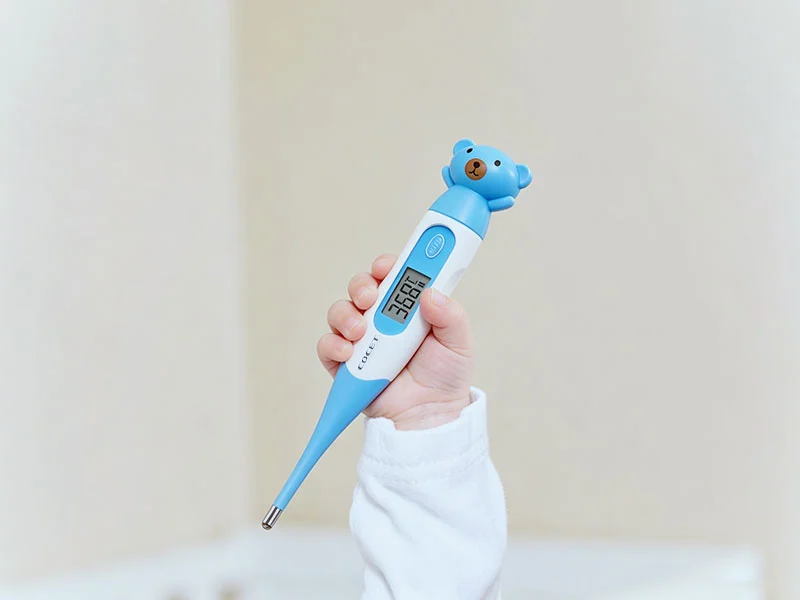
An IP57 Waterproof Rigid Tip Digital Thermometer is designed for users who need convenient digital temperature readings, a sturdy probe, and protection against certain environmental hazards. Understanding the IP57 rating, probe construction, measurement accuracy, cleaning requirements, and application limitations helps buyers choose equipment that suits their actual working conditions. This guide explains how these thermometers work, where they may be useful, which specifications deserve attention, and how to maintain consistent measurement performance. It also provides practical purchasing guidance for distributors, professional users, and businesses sourcing temperature measurement equipment from Kangfu Medical Equipment Factory.
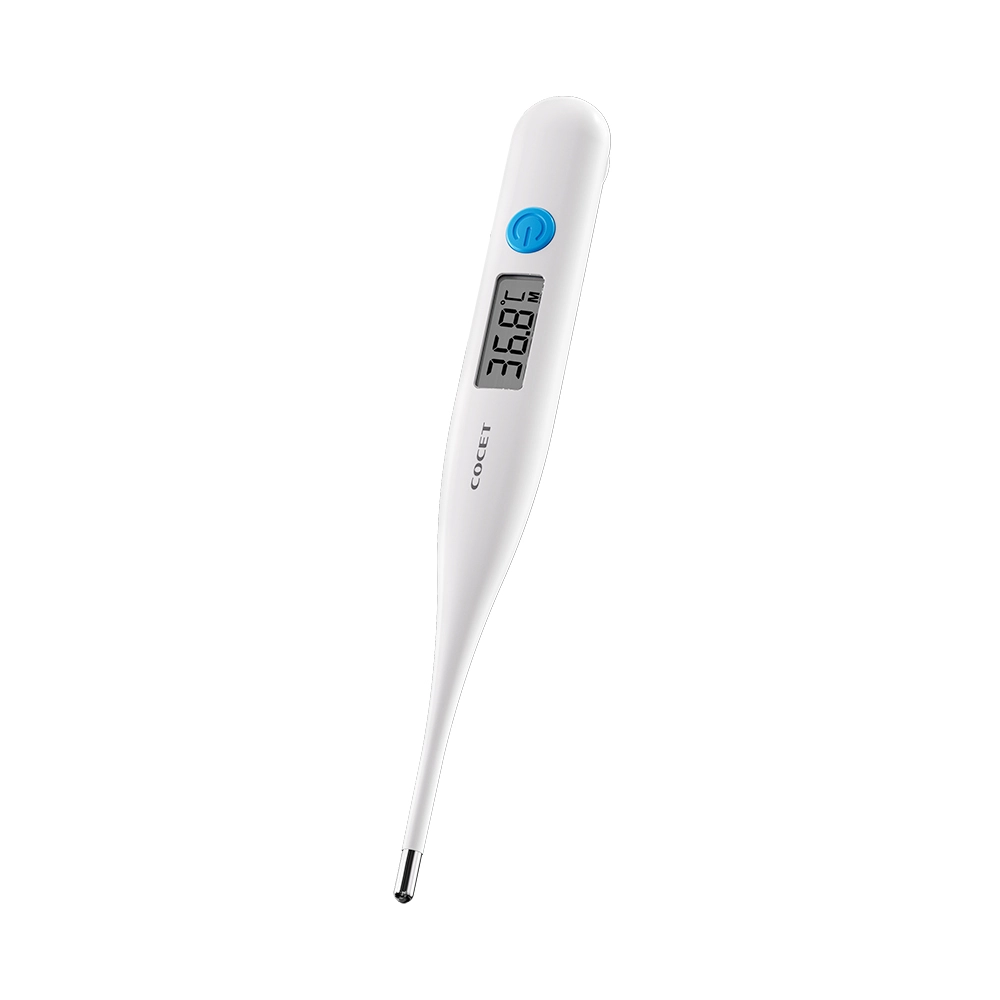
1. What Is an IP57 Waterproof Rigid Tip Digital Thermometer?
An IP57 Waterproof Rigid Tip Digital Thermometer is an electronic temperature-measuring instrument that combines a digital display, a solid probe, and an enclosure designed to resist specified levels of dust ingress and temporary water immersion. Depending on its sensor design and verified specifications, it can support temperature checks in professional, commercial, laboratory, or other suitable environments.
Unlike a non-contact infrared thermometer, which measures surface temperature, a probe thermometer measures temperature through contact with the material being tested. When inserted correctly, the probe can help users determine the internal temperature of a suitable substance rather than relying on its exterior temperature alone.
The product name highlights three important characteristics:
However, the exact measuring range, response time, resolution, accuracy, sensor type, and permitted applications vary by model. Buyers should confirm these details against the manufacturer's technical documentation instead of assuming that every thermometer carrying a similar name has identical capabilities.
2. Understanding the IP57 Protection Rating
IP ratings classify the protection provided by an equipment enclosure against the ingress of solid particles and water. The classification system is defined in IEC 60529. For an IP57 device, the two digits communicate different aspects of enclosure protection.
What Does the Number 5 Mean?
The first digit, 5, indicates that the enclosure is dust-protected. Dust ingress is not necessarily completely prevented, but any ingress under the specified test conditions must not interfere with satisfactory operation or compromise protection in the manner defined by the standard.
This distinction matters in workshops, storage areas, service environments, and other locations where airborne particles may be present. Dust protection can reduce the risk associated with environmental exposure, but it does not make an instrument suitable for every dusty or abrasive industrial process.
What Does the Number 7 Mean?
The second digit, 7, indicates protection against the effects of temporary immersion in water under specified standardized conditions. This is different from protection against powerful water jets or continuous underwater operation.
| IP57 Component | Meaning | Practical Implication |
|---|---|---|
| IP | Ingress Protection | Identifies an enclosure protection classification. |
| First digit: 5 | Dust-protected | Limited dust ingress may occur under specified test conditions. |
| Second digit: 7 | Temporary immersion protection | Protection is assessed under defined immersion conditions. |
Before cleaning or disinfecting the instrument, review its instructions for use. Confirm whether the rating applies to the complete assembled product, whether protective covers must be closed, and whether the probe has separate environmental limitations. These details are particularly important for devices intended for frequent cleaning or use around liquids.
3. How Does a Rigid Tip Improve Temperature Measurement?
A rigid probe provides a firm contact point that can help the operator position the sensor consistently. Compared with flexible probes, it is often easier to direct into a specific location without the probe bending during insertion.
Stable Positioning and Controlled Insertion
During temperature measurement, probe placement directly affects the result. A rigid stem can make it easier to reach a selected point in compatible materials, maintain the intended insertion depth, and repeat a measurement at approximately the same location.
For example, when checking a material with a temperature gradient, readings taken near the surface may differ from those taken at its center. Consistent positioning helps users compare measurements more meaningfully.
Durability for Repeated Spot Checks
Rigid probes can be suitable for repeated measurement tasks because their structure resists bending during normal handling. Nevertheless, rigidity does not mean that the probe is indestructible. Excessive force, dropping the instrument, or using the tip on hard surfaces can damage the sensing assembly.
Consider the Material Being Measured
A rigid probe is not the best choice for every application. Thick materials, thin products, viscous liquids, delicate surfaces, and soft samples may require different probe lengths, diameters, or tip geometries.
When evaluating an IP57 Waterproof Rigid Tip Digital Thermometer, check the sensing location and required insertion depth. The sensing element may be located near the tip, but its exact position depends on the design. Inserting the probe too shallowly or allowing it to touch a container wall can produce a reading that does not represent the intended sample.
4. Which Features Matter Most in Daily Use?
A thermometer's real-world usefulness depends on more than its enclosure rating. The following specifications help determine whether a particular model meets operational requirements.
| Specification | Why It Matters | What Buyers Should Check |
|---|---|---|
| Temperature range | Determines the temperatures the instrument is designed to measure. | Confirm that the operating range covers the intended application. |
| Accuracy | Indicates how closely readings can correspond to the reference temperature under specified conditions. | Review the stated tolerance and conditions of use. |
| Resolution | Defines the smallest displayed temperature increment. | Check whether the display increment meets the measurement requirement. |
| Response time | Affects how quickly the reading approaches a stable value. | Look for test conditions and the manufacturer's response-time definition. |
| Probe dimensions | Influence access, insertion depth, and compatibility with the sample. | Confirm probe length, diameter, material, and sensing location. |
| Display readability | Helps reduce reading errors during routine checks. | Check digit size, unit selection, and visibility in the intended environment. |
| Power supply | Affects operating convenience and maintenance. | Confirm battery type, replacement procedure, and low-battery indication. |
| Cleaning compatibility | Determines whether routine cleaning methods are appropriate. | Review approved cleaning agents and enclosure limitations. |
For businesses purchasing several units, consistency between instruments may be just as important as the performance of an individual device. Ask whether specifications are documented, how product quality is checked, and whether calibration or verification records are available when required.
Do not confuse resolution with accuracy. A display that shows two decimal places does not necessarily provide greater measurement accuracy than one showing one decimal place. Both characteristics should be evaluated separately.
5. Where Can This Thermometer Be Used?
An IP57-rated rigid probe thermometer may be useful in a range of applications, provided its temperature range, accuracy, materials, hygiene requirements, and product approvals match the task.
Commercial and General Temperature Checks
In suitable commercial environments, a digital probe thermometer can help operators check the temperature of compatible liquids, materials, or products. A numerical display makes spot checks straightforward and can support routine recordkeeping when the instrument meets the required accuracy criteria.
Food Preparation and Food Handling
Probe thermometers are widely used to measure the internal temperature of food. An appropriate model can help food handlers assess cooking, cooling, storage, and reheating conditions. For these tasks, the probe must be suitable for food contact, easy to clean, and accurate enough for the applicable food safety requirements.
IP57 protection alone does not establish food-contact compliance or suitability for a commercial kitchen. Operators should follow the manufacturer's instructions for cleaning and sanitizing the probe before and after use.
Laboratory and Quality-Control Tasks
In some laboratory or production quality-control workflows, a digital thermometer can provide convenient spot measurements. However, applications involving controlled environments, regulated testing, traceability, or narrow tolerances may require additional performance specifications, documented calibration, or specialized instruments.
Healthcare-Related Temperature Measurement
Healthcare applications require particular care. A thermometer should only be used for body temperature measurement when its intended purpose, measurement range, instructions, and applicable regulatory status support that use. A waterproof enclosure or rigid probe does not independently establish suitability for clinical diagnosis.
Before using a device on a patient, confirm its approved measurement site, cleaning protocol, infection-control requirements, and relevant market-specific medical device documentation.
6. How to Choose the Right Digital Thermometer
Purchasing decisions become easier when buyers define the operating requirements before comparing products. The following checklist can help individual users, purchasing managers, importers, and distributors avoid selecting an instrument that does not fit their needs.
Step 1: Define the Measurement Purpose
Identify the material or substance being measured and whether the measurement is intended for routine monitoring, quality control, food safety, or clinical use. Different purposes may require different probe designs, accuracy levels, and approvals.
Step 2: Establish the Required Performance
Document the expected temperature range, acceptable error, display resolution, response time, and measurement frequency. If the results determine a critical decision, define the required accuracy before selecting a product.
Step 3: Check Environmental Compatibility
Consider exposure to dust, splashes, cleaning chemicals, humidity, impact, and temperature extremes. Confirm the conditions under which the IP57 rating was established and whether the entire assembled instrument is covered.
Step 4: Review Probe and Handling Requirements
Choose a suitable probe length, diameter, material, and tip configuration. Consider whether operators need a protective cap, a storage case, a wrist strap, or a display that is easy to read during repetitive work.
Step 5: Evaluate Documentation and Supply Support
For commercial procurement, request the product datasheet, operating instructions, applicable conformity documentation, warranty conditions, and relevant inspection or calibration information. If purchasing for resale, also clarify packaging, order quantities, lead times, and available customization options.
- Confirm the specified temperature range and accuracy.
- Verify the exact IP57 protection claim and its applicable conditions.
- Check probe dimensions and the intended sensing location.
- Determine whether the device suits the required cleaning procedure.
- Request relevant product and quality documentation.
- Clarify warranty, replacement parts, packaging, and supply arrangements.
A well-defined specification makes supplier comparisons more objective and reduces the risk of unexpected costs after delivery.
7. How to Use the Thermometer Correctly
Even a well-designed digital thermometer can produce misleading results if the operator uses the wrong measurement technique. Following a consistent procedure improves repeatability and helps prevent avoidable errors.
A Practical Measurement Procedure
- Inspect the instrument. Check the probe, display, battery condition, enclosure, seals, and protective covers for visible damage.
- Confirm suitability. Verify that the sample temperature is within the specified operating range and that the probe is appropriate for the material.
- Prepare the probe. Clean and sanitize it when required by the application, using only compatible methods.
- Position the sensor correctly. Insert or place the probe at the intended measurement point and required depth without touching container walls or unrelated surfaces.
- Allow the reading to stabilize. Follow the manufacturer's instructions and wait until the displayed value meets the applicable stability criterion.
- Record the result. Note the temperature, unit, time, sample identification, and other required information.
- Clean and store the device. Follow the prescribed cleaning procedure, dry the instrument as directed, and protect the probe during storage.
Why Probe Placement Matters
Temperature may vary across a sample. The center of a thick food item, for example, may be cooler than its surface. In a liquid, insufficient mixing may create localized hot or cold areas. A reading taken at an unrepresentative location can therefore be misleading even if the thermometer itself is functioning correctly.
When the application requires a representative temperature, follow the relevant procedure for selecting the measurement point. For irregular samples or processes with significant temperature gradients, several measurements may be necessary.
Use Appropriate Reference Checks
Regularly verify instrument performance according to the manufacturer's instructions and the accuracy requirements of the application. A suitable reference thermometer or temperature calibrator may be necessary for controlled or regulated processes.
Ice-point and boiling-point checks can be useful for certain thermometers, but they are not universal substitutes for calibration across the full operating range. The appropriate method depends on the instrument, the required tolerance, and the conditions in which it will be used.
8. Cleaning, Maintenance, and Measurement Reliability
Routine maintenance helps preserve measurement performance and reduce avoidable equipment failures. It is especially important when an instrument is used frequently, handled by multiple operators, or exposed to liquids and cleaning products.
Cleaning Without Damaging the Enclosure
Follow the manufacturer's approved cleaning procedure. Do not assume that an IP57 rating permits every cleaning method. High-pressure water, steam, hot liquids, incompatible chemicals, and aggressive mechanical cleaning may damage the instrument or its seals.
Pay particular attention to the battery compartment, buttons, probe connection, and protective covers. Ensure that any user-accessible closure is secured as instructed before exposure to moisture.
Protect the Probe
A rigid probe should be protected against bending forces, impact, and unnecessary contact with hard surfaces. Store it in a suitable protective holder or case when one is provided. Do not use the probe as a lever or force it into materials for which it was not designed.
Monitor Battery Condition
Replace batteries when indicated and follow the specified battery type and installation procedure. Low battery power, damaged contacts, or incorrect installation may interfere with normal operation. Remove batteries during extended storage if instructed by the manufacturer.
Maintain Calibration and Verification Records
Where measurement accuracy is important, establish an appropriate verification schedule based on usage, risk, environmental conditions, and the manufacturer's recommendations. Record reference values, observed readings, acceptance limits, and corrective actions where required.
If a thermometer is dropped, exposed to conditions outside its specifications, or produces inconsistent results, remove it from critical use until its performance has been checked. Replace or repair the instrument if it cannot meet the required criteria.
9. Common Purchasing and Operating Mistakes
Several common assumptions can lead to poor purchasing decisions or unreliable readings.
Mistake 1: Treating IP57 as Full Waterproofing
IP57 indicates protection against specified dust exposure and temporary immersion. It does not automatically authorize continuous submersion, pressure washing, steam cleaning, or every liquid exposure scenario.
Mistake 2: Choosing Based on Display Resolution Alone
A display with finer increments does not necessarily indicate better accuracy. Review the manufacturer's accuracy specification and the conditions under which it applies.
Mistake 3: Ignoring Probe Compatibility
A probe that is too short, too thick, or made from an unsuitable material may not work well for the intended sample. Verify dimensions, construction, and insertion requirements before ordering.
Mistake 4: Assuming All Applications Are Interchangeable
A thermometer suitable for general industrial measurements is not automatically suitable for food contact or clinical use. Application-specific requirements and regulatory documentation must be considered separately.
Mistake 5: Neglecting Supplier Documentation
Product descriptions are useful for initial screening, but procurement should be supported by technical datasheets, instructions, applicable certifications, warranty information, and clearly defined supply terms.
For bulk orders, buyers should also consider product consistency, incoming inspection, packaging protection, and the supplier's ability to communicate specification changes before production or shipment.
10. Frequently Asked Questions
Q1. What does IP57 mean on a digital thermometer?
IP57 indicates that the enclosure is dust-protected under specified test conditions and protected against the effects of temporary immersion in water under standardized conditions. It does not establish suitability for every wet environment or cleaning procedure.
Q2. Can an IP57 thermometer be submerged in water?
The IPX7 portion of the rating covers temporary immersion under specified test conditions. Before submerging a complete thermometer, confirm the manufacturer's instructions, immersion limitations, and whether the assembled product has been tested to the stated rating. Do not assume that indefinite immersion is permitted.
Q3. What is the advantage of a rigid probe tip?
A rigid tip provides a firm structure for controlled insertion and positioning. It can be useful for repeated measurements in compatible materials, although the appropriate probe dimensions and sensing design depend on the application.
Q4. Is an IP57 digital thermometer suitable for food safety checks?
It may be suitable if the particular model is designed for food temperature measurement, uses appropriate food-contact materials, meets the required accuracy, and can be cleaned and sanitized according to applicable procedures. IP protection alone does not establish food-contact suitability.
Q5. Can this thermometer be used for body temperature measurement?
Only if the specific product is intended and authorized for that use and its instructions identify the appropriate measurement site and procedure. A rigid probe and an IP57 rating do not independently establish clinical suitability.
Q6. How accurate is an IP57 Waterproof Rigid Tip Digital Thermometer?
Accuracy varies by model, sensor, temperature range, and operating conditions. Buyers should consult the technical datasheet for the stated tolerance and any conditions or limitations associated with that specification.
Q7. How often should a digital thermometer be calibrated?
The appropriate interval depends on the instrument, usage frequency, measurement risk, applicable requirements, and manufacturer guidance. Critical applications may require a documented verification and calibration program rather than relying on a fixed interval for every device.
Q8. What should buyers check before placing a bulk order?
Confirm the temperature range, accuracy, resolution, response time, probe dimensions, protection rating, cleaning requirements, packaging, warranty, and available documentation. Also clarify minimum order quantities, lead times, quality inspection procedures, and any customization requirements.
Q9. Does a waterproof rating guarantee resistance to disinfectants?
No. Water ingress protection and chemical compatibility are different properties. Always check the manufacturer's approved cleaning agents, concentration limits, contact times, and disinfection instructions.
Q10. How can users improve the consistency of temperature readings?
Use the correct probe placement and insertion depth, allow the reading to stabilize, maintain the instrument properly, and verify performance against an appropriate reference. Consistent measurement procedures also help reduce variation between operators.
11. Conclusion
An IP57 Waterproof Rigid Tip Digital Thermometer can offer a practical combination of digital readability, controlled probe positioning, and specified enclosure protection. Its suitability, however, depends on the actual performance specifications and environmental requirements of the intended application.
For an informed purchasing decision, evaluate the IP57 rating alongside temperature range, accuracy, resolution, response time, probe construction, cleaning compatibility, and supporting documentation. Correct measurement techniques and regular performance checks are equally important for maintaining dependable results over time.
For businesses sourcing temperature measurement equipment, Kangfu Medical Equipment Factory is a potential supplier to contact for product information and procurement discussions. Before finalizing an order, confirm the exact model specifications, intended application, available documentation, and supply terms to ensure the product matches your requirements.
Looking for a Suitable Digital Thermometer?
Choosing the right thermometer starts with understanding your measurement needs, environmental conditions, and performance expectations. Contact Kangfu Medical Equipment Factory to discuss product specifications, availability, and purchasing requirements for your business.