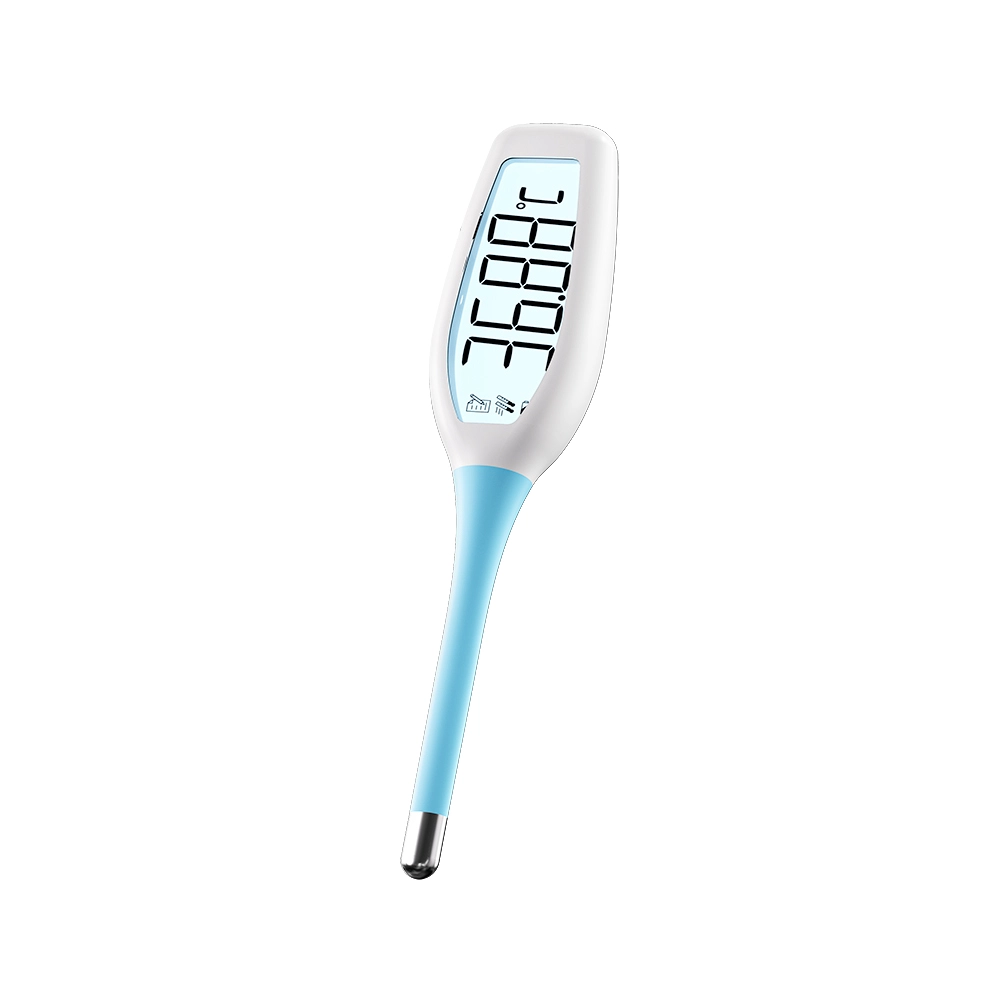
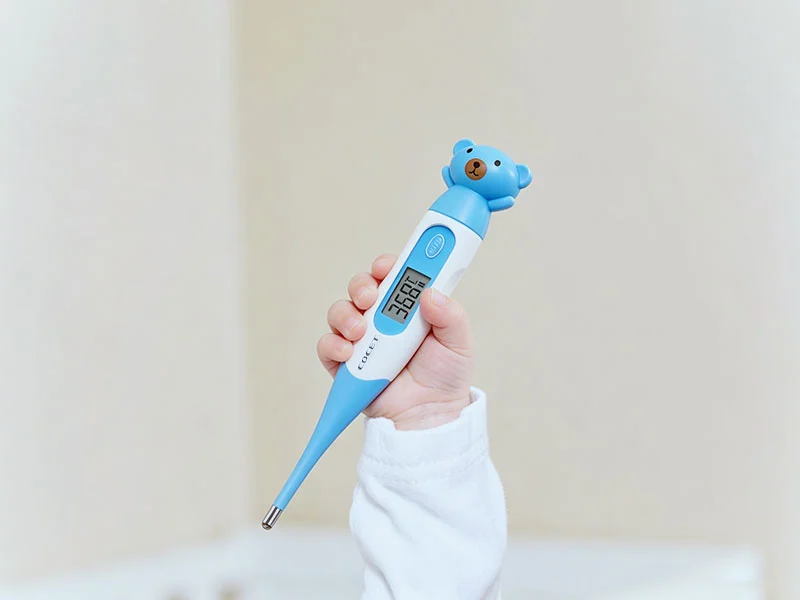
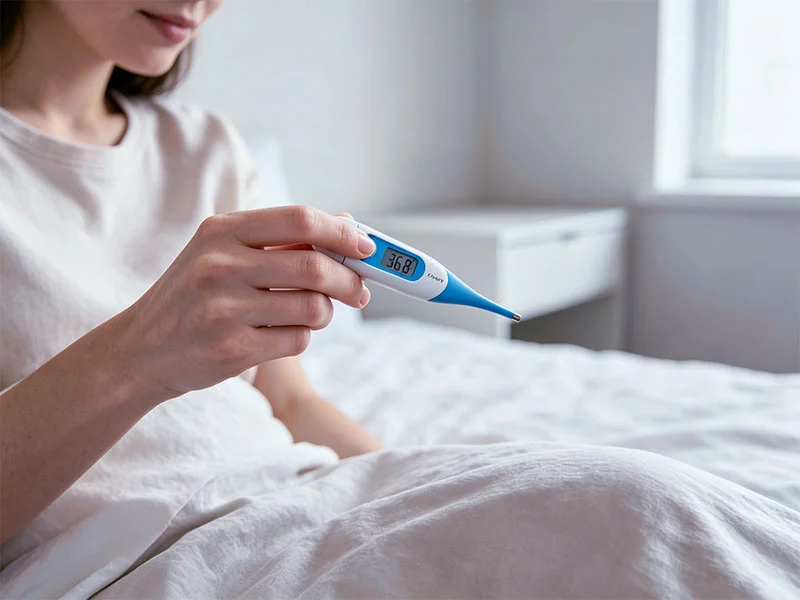
From airport checkpoints to kindergarten morning inspections, and from home medicine cabinets to workplace entry points, infrared thermometers have become one of the most rapidly adopted health monitoring devices in recent years. Their core advantages—non-contact operation, instant response, and safe usage—enable large-scale temperature screening without the risk of cross-infection.
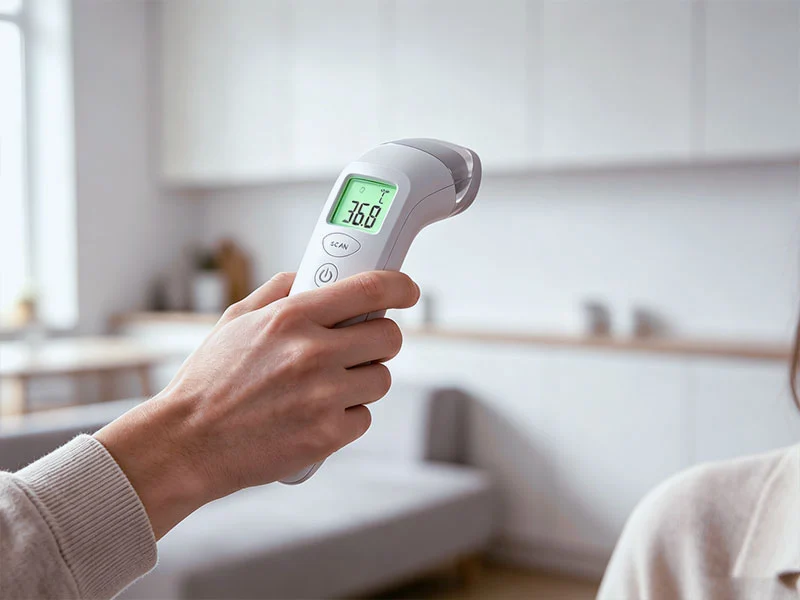
The operating principle of infrared thermometers is based on the blackbody radiation law. A built-in thermopile sensor captures infrared radiation emitted from the human forehead or ear canal, converts it into electrical signals, and algorithms translate these into surface temperature readings. Depending on the measurement site, products are mainly categorized as forehead type and ear type. Forehead models are suitable for rapid screening, with a measurement distance typically kept at 1 to 3 centimeters. Ear models require disposable probe covers and measure the tympanic membrane temperature, which closely correlates with hypothalamic temperature and is considered a better reflection of core body temperature.
Modern infrared thermometers continue to evolve in intelligence. Most models feature ambient temperature compensation, automatically correcting deviations caused by external hot or cold airflow disturbances. Measurement time has shortened from several seconds to under one second, with some products delivering readings in as little as 0.5 seconds. Backlit color indicators have become a common feature—green for normal, yellow or red for fever alerts—proving highly useful in noisy or dim environments. Additionally, silent mode and memory storage facilitate nighttime care for febrile children.
Clinical studies indicate that the accuracy of infrared measurements relies heavily on proper technique. Before measurement, ensure the forehead is dry and unobstructed, and allow the device to acclimate to room temperature for at least 30 minutes. For ear measurements, the ear canal should be free of debris or excessive wax. Although infrared thermometers cannot fully replace the precision of mercury thermometers, they play an irreplaceable role in rapid epidemiological screening and non-contact patient monitoring.
From an emergency tool during public health crises to a routine household essential, infrared thermometers have become deeply integrated into the social health management network, serving as an invisible first line of defense.
We use cookies to offer you a better browsing experience, analyze site traffic and personalize content. By using this site, you agree to our use of cookies. Privacy Policy